SHOPIFY APPS
SHOPIFY APPS
Standalone web applications designed to seamlessly integrate into Shopify stores.
OUR APPS
FEATURED APPS
Discount and price checkout
Automate tracking price history and display the lowest price in the last 30 days.
Products Ingredients & Nutrition
Perfect for compliance with food labeling regulations in the US, Canada, and Europe
SmileScore
Ideal for businesses targeting a younger demographic or leveraging social media marketing.
Search
Many companies still run their workflows on paper, in spreadsheets and in the heads of experienced staff. We build process digitization software that closes the gaps between the systems you already have, without a new ERP.
An order arrives by mail, the plan lives in a spreadsheet, and where job A-2421 stands is a walk across the hall. None of that is broken enough to justify a new ERP, and all of it costs time every day.
We map the workflow itself, from the order through production and quality control to the reporting. Each step is defined once and then enforced, and the documentation falls out of the daily work.
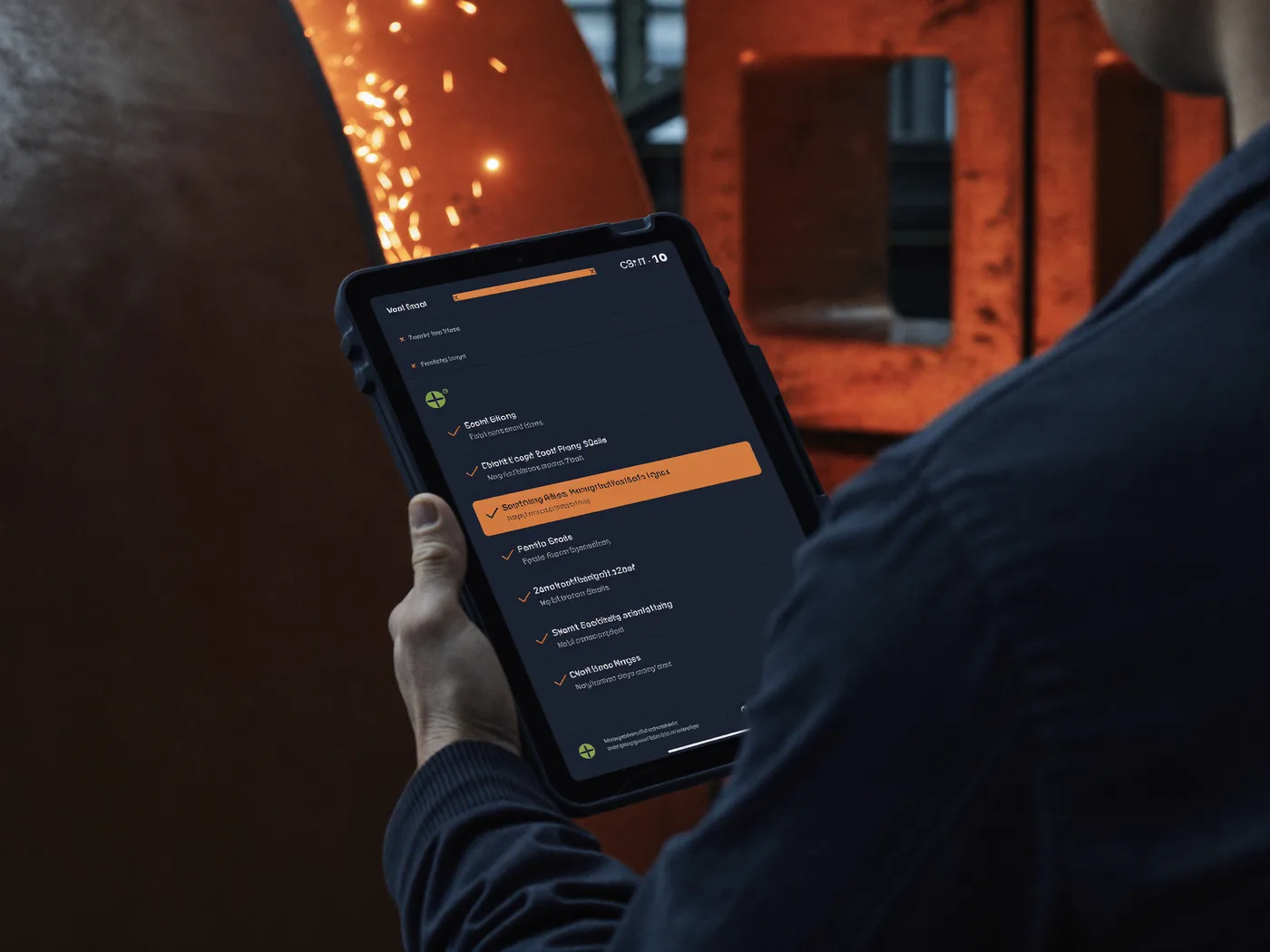
The tools run on a phone or a tablet right where the work happens, and dictation holds up with gloves on and machines running. Websites and online shops are a separate service, this page is about the systems behind them.
How process digitization runs in practice
a plan, do, check, act loop, running in the tools
A warehouse portal for a pharmaceutical client, a management dashboard we run ourselves, and a service tool built for a trades company. More client work sits on the references page.
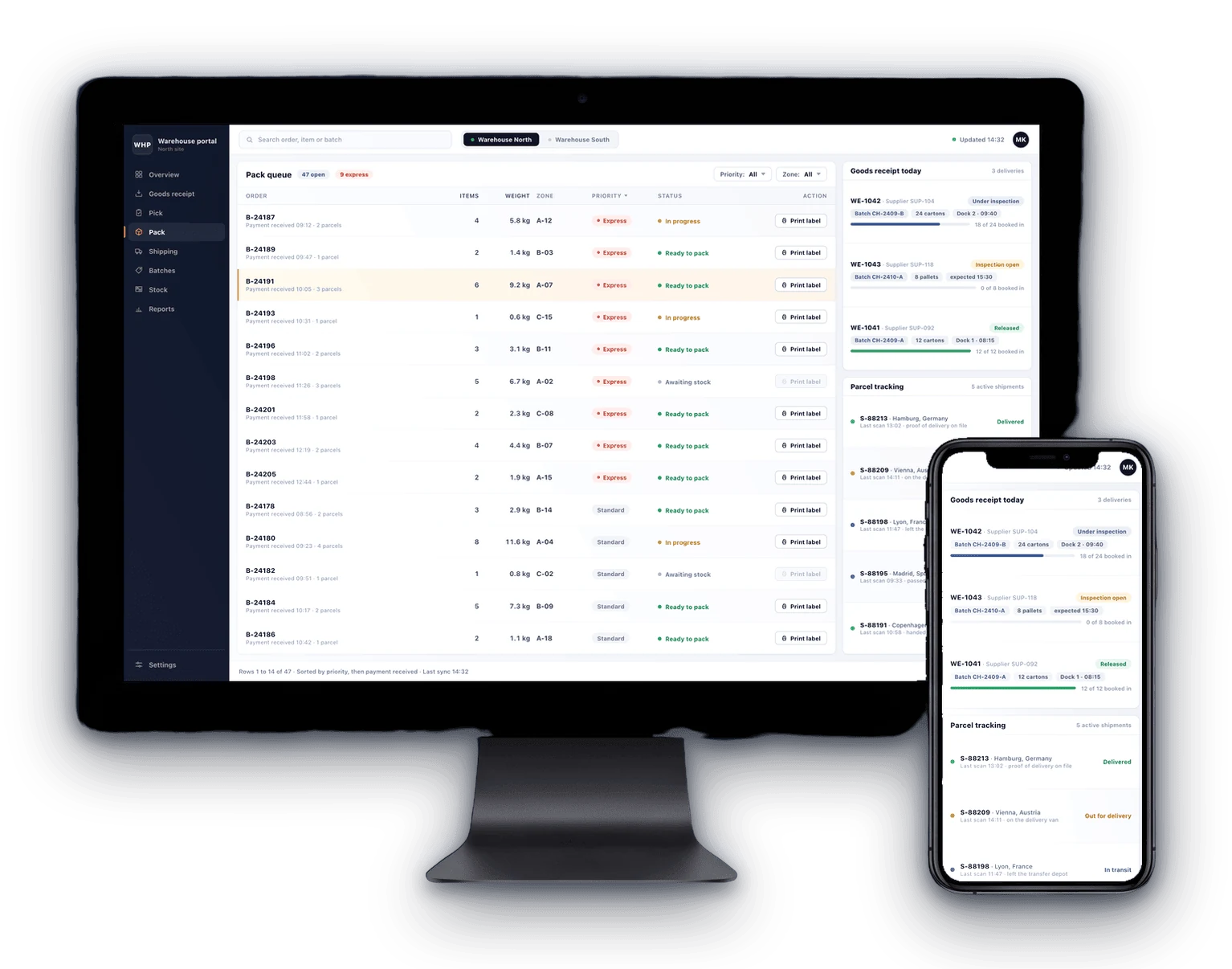
A warehouse and fulfillment portal developed from scratch. It runs across several warehouse locations and talks to the shop directly. Goods receipt works with batch management, lab results are recorded per batch, and a batch only moves into shipping once it has been released. Every check stays on file with the tester and the time it happened.
Batch management from goods receipt to release
Pick and pack flow that guides staff through every order
Shipping labels printed straight from the order
Parcel tracking in the same screen as the order
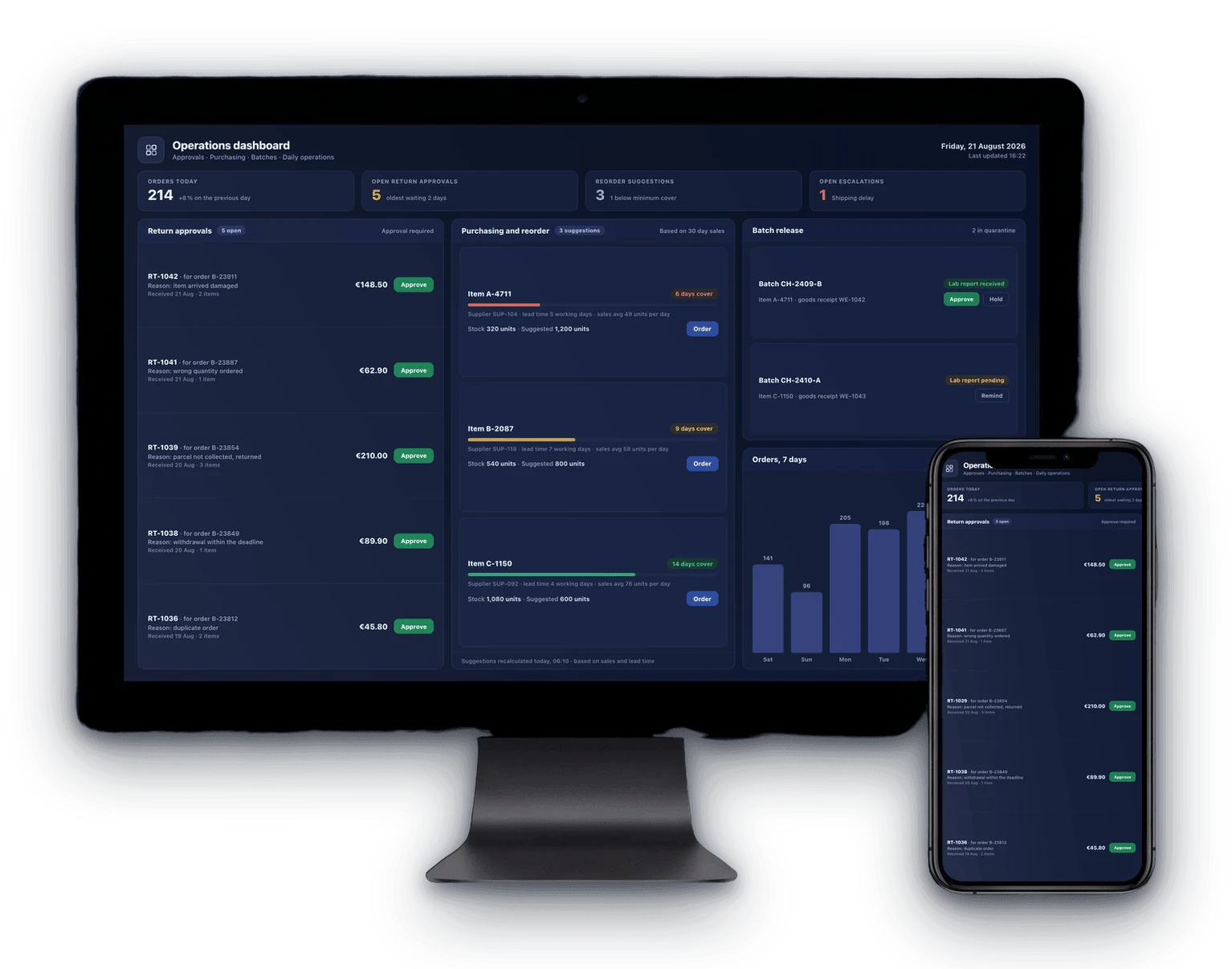
A management dashboard for the office. Return approvals, supplier reorders, batch releases and open escalations sit next to each other, so a decision is taken where the data already is instead of in a mailbox. What used to be four tools and a phone call is one screen somebody looks at in the morning.
Return approvals with reason and amount
Reorder suggestions based on sales and lead time
Batch release with the lab report attached
Open escalations visible before a customer calls
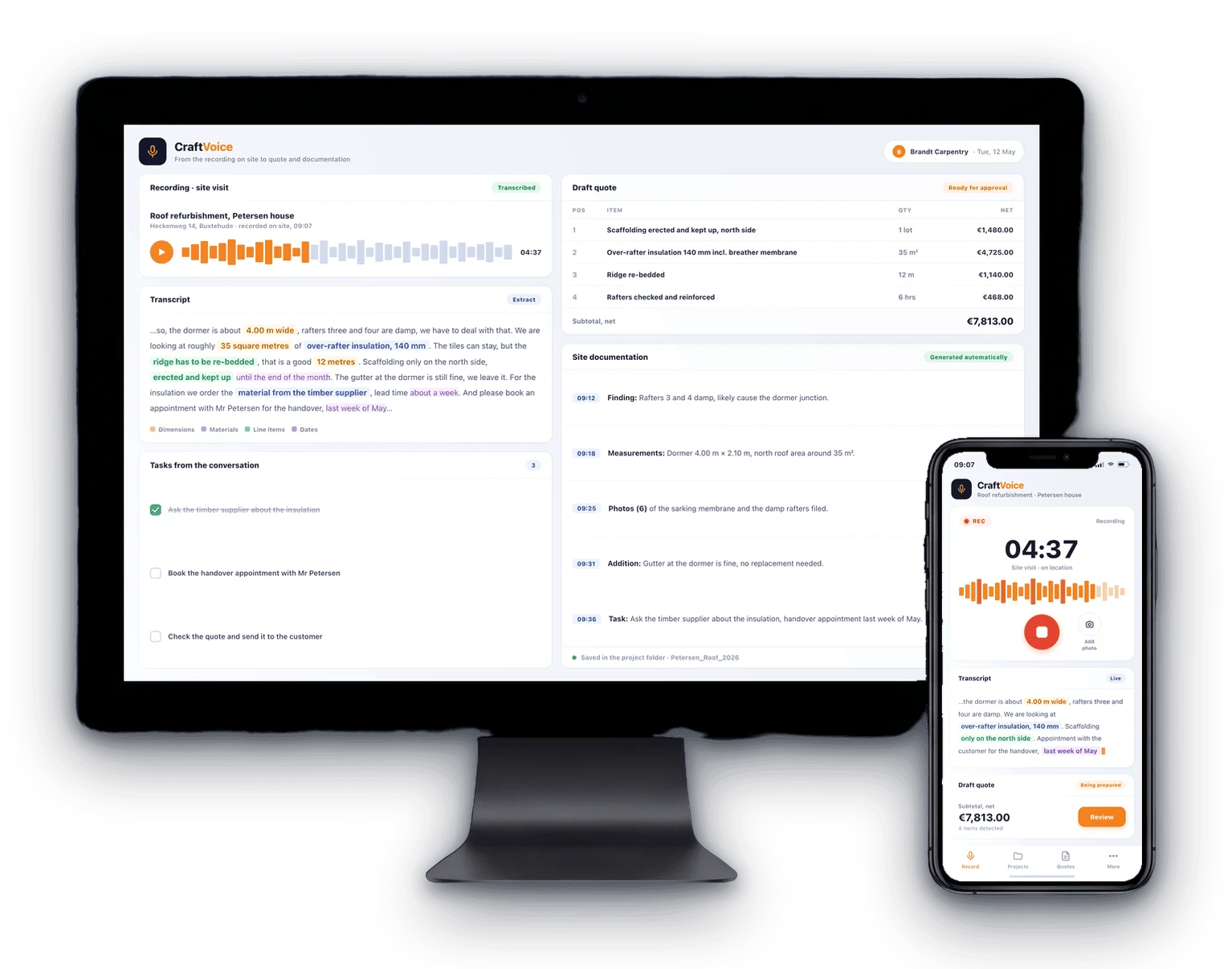
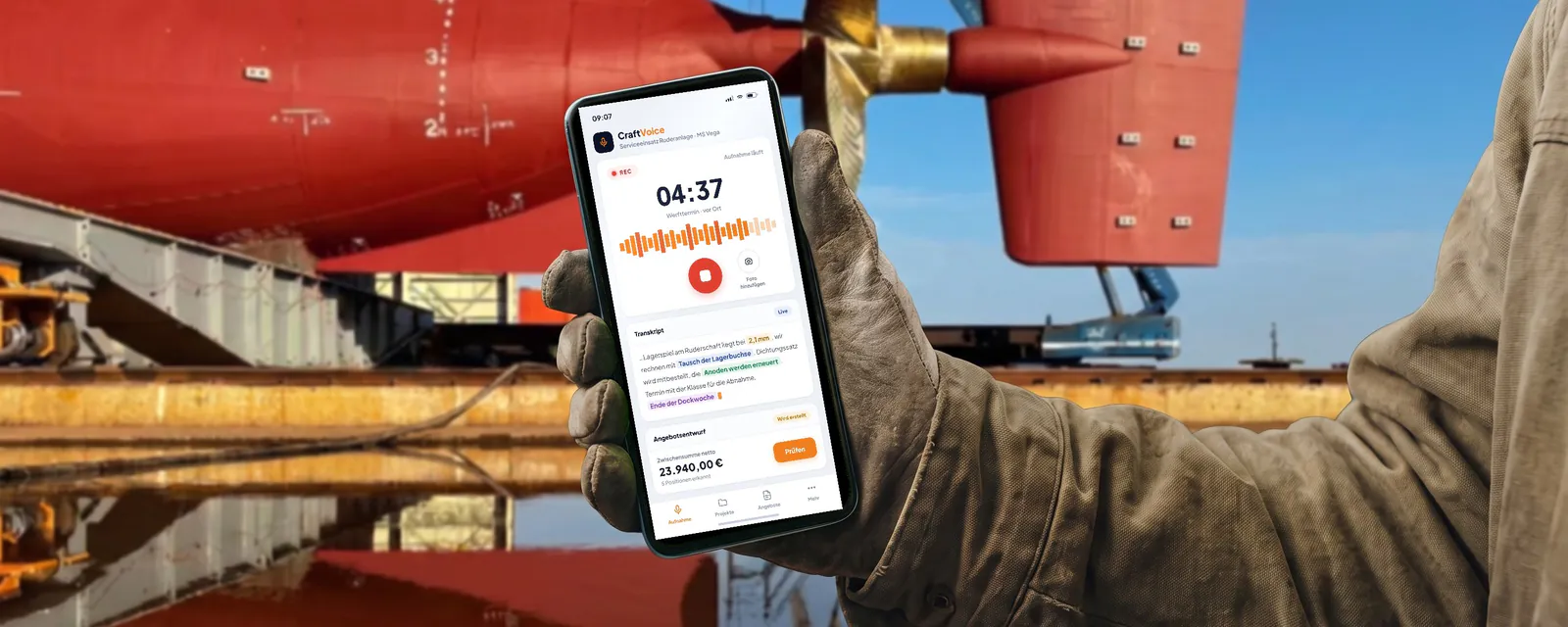
Built for a service company. The technician records the conversation and the photos on site, and out of that recording come the site documentation and a draft quote with items, materials and working hours. The office checks the draft, adjusts prices and sends it. Every visit stays stored, so the estimates get better with each job.
Recorded on site, no paper forms
Draft quote with items, quantities and hours
Photo documentation filed against the job
Every visit searchable for the next estimate
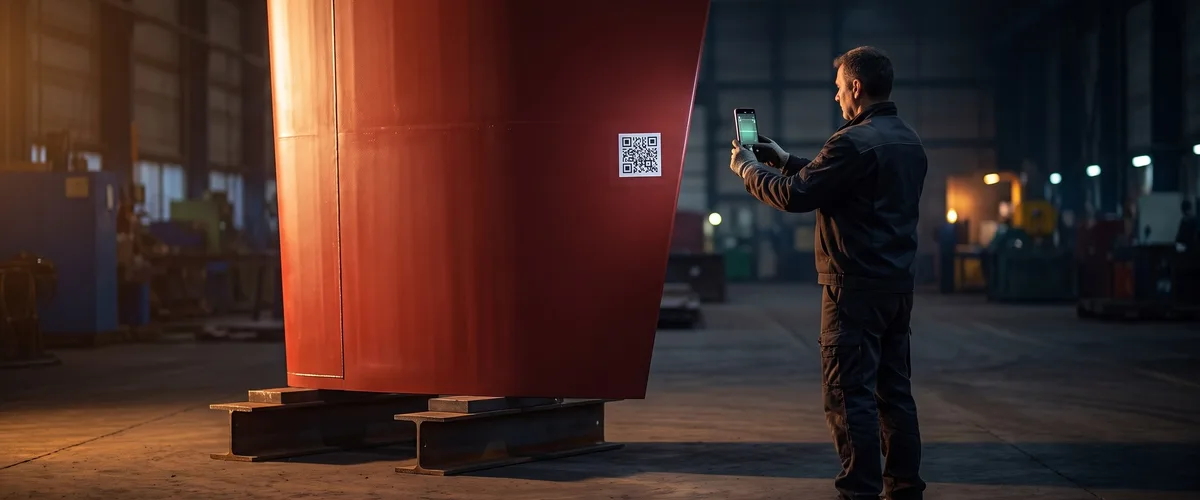
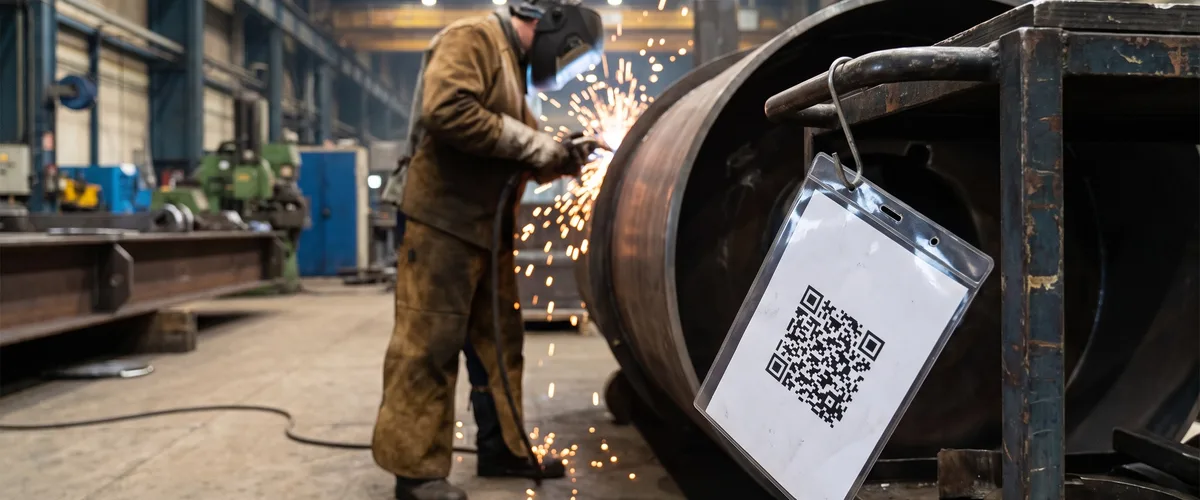
One QR code travels with the part from the first work step to dispatch. Six stages, each one recorded where the work actually happens.
The order comes in, positions and the bill of materials are created.
Work steps and the parts they need are set for the job.
From here the code travels with the part through every station.
Every scan records arrival time, operator and working time.
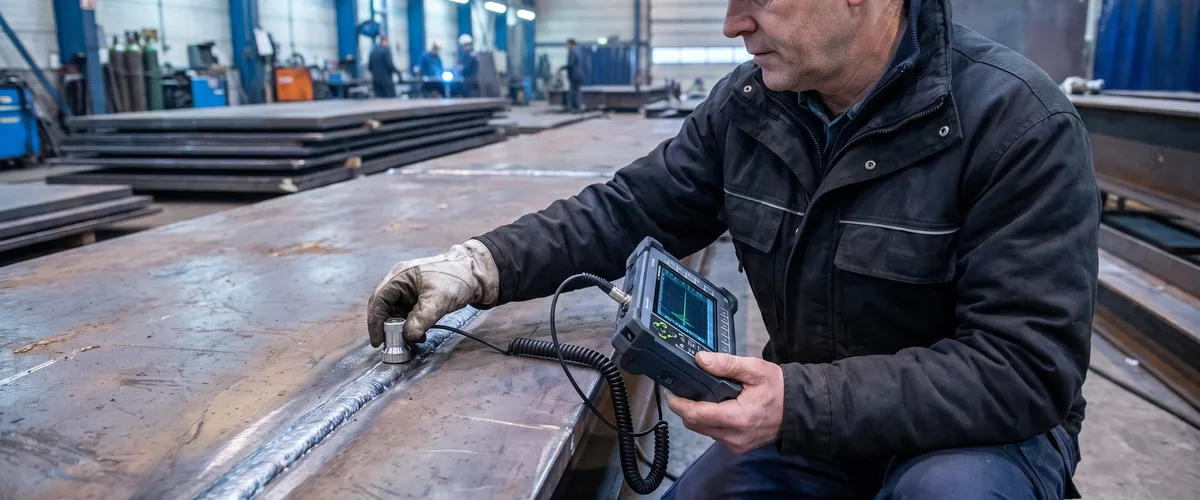
Tester, finding, rework and photo documentation, filed against the part.
Times, cost and error rates per station and per operator, plus planned against actual per order.
Example figures from a customer system concept.
Average lead time
Error rate
Utilization
Average contribution margin
Once the scans are running, those figures come out of the tool itself, which is what turns a calculation from an estimate into a record.
They close the gaps between the tools you already have, and each one can start as a small pilot with a clearly limited scope.
A QR code travels with the part from the first work step to dispatch. Every scan records arrival time, operator and working time, and quality checks are filed against the part with photos. At the end you can see where time and cost actually went, per station and per order.
Between the appointment, the measurements and the quote a lot of time and knowledge goes missing in service and maintenance businesses. A service tool records the visit on site and turns it into a draft the foreman only has to check and send. CraftVoice above is that principle, already built.
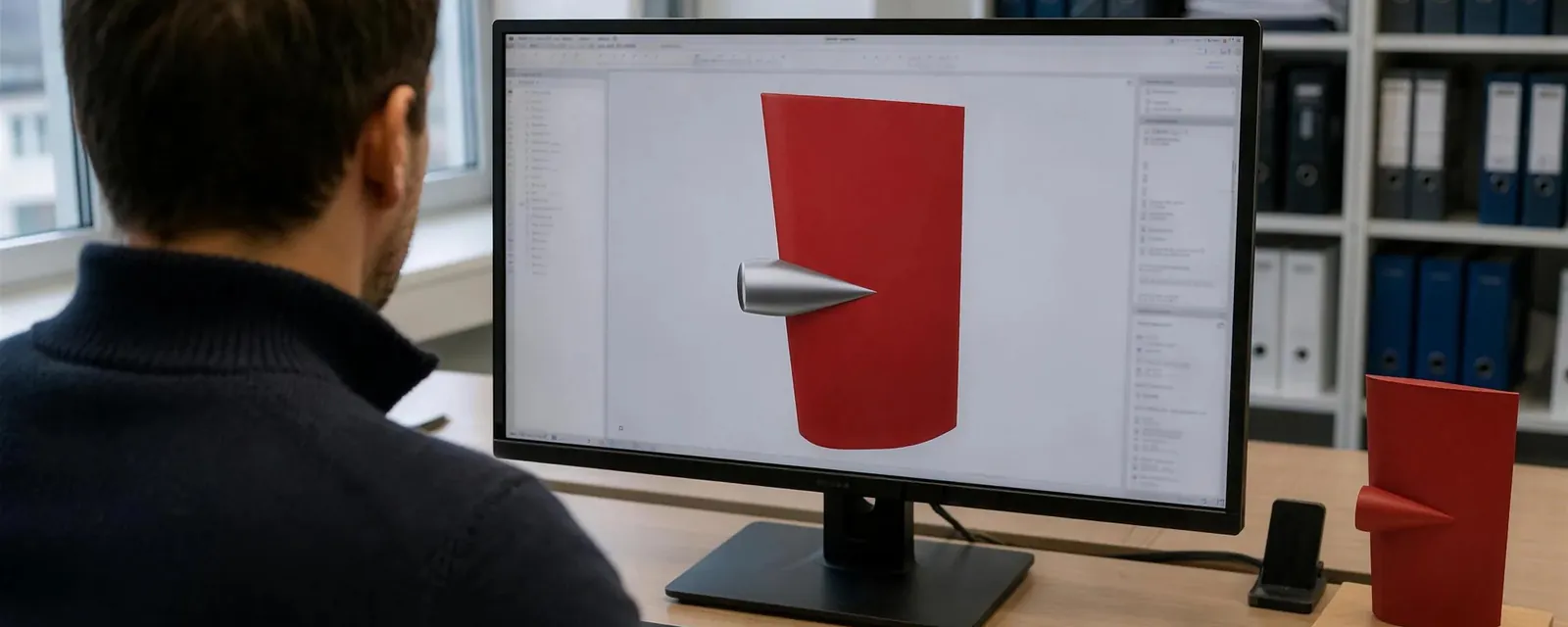
In many industrial companies every quote runs through an engineer, which turns days into weeks and ties up the most expensive hours in the building. A configurator does that arithmetic with your formulas and your price lists, AI workflows take over the parts that rely on experience values, and the engineer only checks the result. The customer gets a number while the enquiry is still warm.
Also on the table: B2B spare part portals with customer prices, availability and order history, connected to the service tool if you want it, and a stowage planning study currently in progress, where a trained optimization model proposes how containers are distributed on board.
Six points we settle before the work starts, because they decide whether a tool survives its first year.
Every work step is recorded with operator, station and timestamp, and the report comes out of the running tool instead of a folder somebody keeps on the side. Whether that trail satisfies a standard such as ISO 9001 is for your certification body to judge. Our part is that the data is complete and exportable.
Operation on German servers is possible, including the data processing agreement, and it stays an option rather than a condition. The system runs on Hetzner infrastructure, a European provider with several locations, and we set up and harden every server ourselves, tune it for load time and scale the capacity with the load.
ERP, PIM, shop, label printer and shipping provider. The tool is fitted into the landscape that is already in the building, it reads the data where that data lives today, and the systems you keep stay as they are.
Going live is not the end of the job. We keep the servers up to date, watch the tool in daily use and pick up changes as the work on the floor changes. Support runs in German and English, with a direct line instead of a ticket queue.
The project is planned through before the quote goes out. The offer names every module, what it does and what it costs, so you know what you get before you commit, and the estimate is binding.
We invoice the hours we work, once a month, with a record you can follow line by line. There is no licence fee and no platform charge on top, because the software is yours once it is built.
Security belongs to the same conversation. How we audit an existing setup and harden it is on the IT security page.
No. The tools sit between the systems you already run and close the gaps between them. Where an ERP is in place we connect to it. Where the plan lives in a spreadsheet today, the tool takes over that job first.
A clearly cut first module is a matter of weeks, not quarters. We start with the one workflow that hurts most, put it into daily use, and build the next step on what that one taught us. A small pilot with a limited scope is a normal way to begin.
Yes. Operation on German servers is possible, including the data processing agreement. It is not a condition though, because the system runs on Hetzner infrastructure and that European provider has more than one location. We set the servers up ourselves and scale the capacity with the load, and where a cloud service is part of the setup it is named and agreed beforehand rather than discovered later.

Yes. The tools are operated on a phone or a tablet, scanning runs through the camera, and for gloved hands and noisy halls there is dictation that holds up in exactly those conditions.
We bill the hours we work, once a month, with a record of hours you can follow line by line. There is no licence fee and no platform charge on top. The effort for a piece of work is estimated in writing before you commit, and that estimate is binding.
You do. Code, accounts and rights sit with you once the project is finished, and the documentation goes with them.
Describe what you want to achieve and we look for the simplest way to get there. A first assessment costs nothing.
More on what we do: services, client references, IT security and the tools overview on the home page.